
tl;dr:

IHOP’s upselling performance had been declining across Southern California. After interviewing staff from 15+ restaurants, I discovered that motivation, not skill, was the main barrier.
I created an eLearning course where learners take on the role of a new server coached by “Manny” (supportive manager) and challenged by “Cary” (caustic colleague). The course uses branching scenarios, realism validated by field trainers, and persona-driven design.
Tools Used:




Here’s the details…
The Problem:
IHOP corporate reported low upselling consistency and declining attach rates across multiple U.S. regions, especially Southern California. While they knew upselling could dramatically improve revenue and tip earnings, they weren’t sure why servers weren’t doing it.
Before building anything, I conducted in-store research across 15 IHOP restaurants in the Los Angeles area, shadowing service interactions and interviewing managers and servers.
Managers were not fully aligned with iHospitality principles and struggled to apply them consistently.
Training materials were fragmented, lacking a unified approach to teaching customer service skills.
The gap in engaging, effective learning solutions led to slower adoption of best practices and suboptimal guest interactions
On-Site Interviews + Personas:
Field interviews revealed three distinct learner personas:
Newbie
Just trying to get through the shift
Doesn’t see the value in upselling
Unsure how to phrase an upsell
Novice
Upsells when convenient
Doesn’t want to feel “pushy”
Knows what to do, unsure when to do it
Expert
Upsells naturally and confidently
Understands guest cues
Highly motivated by increased earning
These personas drove scenario design, pacing, and the coaching voice inside the course.
Gap & Barrier Analysis:
Using a structured gap analysis framework, I identified barriers across:
Knowledge
Skills
Environmental constraints
Motivation
The overwhelming blocker was motivation. Here are some direct quotes from Servers:
“It doesn’t really make a difference for me.”
“It’s too much work for not enough money.”
Motivational Framing, “What’s in It for Me?”:
During the needs analysis, it became clear that motivation, not knowledge or skill, was the primary barrier to upselling. Servers consistently expressed that they didn’t see a meaningful personal benefit.
To address this head-on, I opened the course with a bold, direct question:
“Do you want to make more money?”
This line serves two crucial purposes:
It immediately hooks the learner, disrupting expectations and grabbing attention within the first few seconds.
It answers an important question in adult learning: What’s in it for me?
After establishing this hook, the course later presents real IHOP earnings data showing that servers who upsell consistently can make around $225 more per week in tips. This number reframes upselling from a corporate mandate into a personal benefit.
Action Map:
I created a full action map to define:
The exact behaviors servers must perform during a shift
The decisions they must make to upsell naturally
The real obstacles that interrupt these behaviors
What practice scenarios are required to build fluency
This ensured the course drove desirable behaviors in our servers and not just an information dump.
Branching Dialogues:
I built branching conversations that modeled:
Guest reactions
Timing and phrasing
Emotional tone shifts
Missed vs. successful upsell opportunities
Natural conversation flow
Tiered outcomes (great / good / poor interaction)
I partnered closely with specific SMEs:
Expert IHOP field trainers, and
Veteran servers from multiple Southern California restaurants
Their lived experience was invaluable in shaping:
Authentic guest refusal lines
Realistic pacing of service interactions
How servers recover from a “no”
The specific phrasing that actually works in IHOP restaurants
The nuances between “confident” and “pushy” upselling
The Solution:
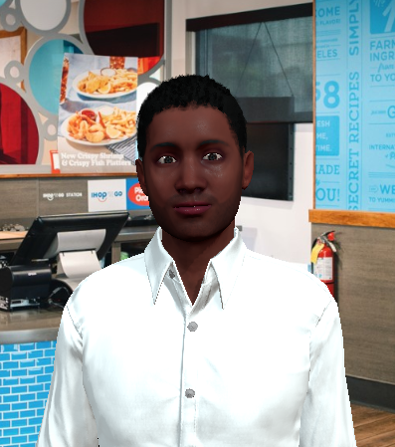
Learners step into the shoes of a new IHOP server, guided by two narrative characters:
Manny, The Supportive Manager
Teaches technique, structure, warmth, and confidence.
Cary, The Caustic Colleague
Cary is a seasoned IHOP server who believes upselling “isn’t worth the trouble.” He represents the real-world resistance many stores face.
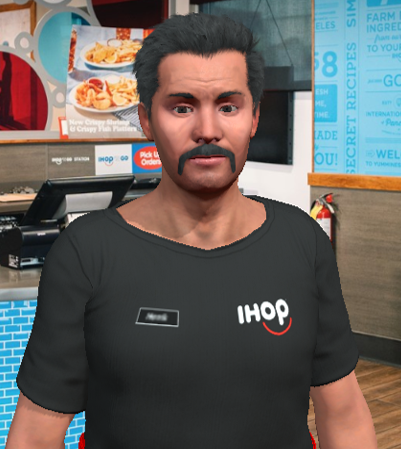
Cary’s Transformation:
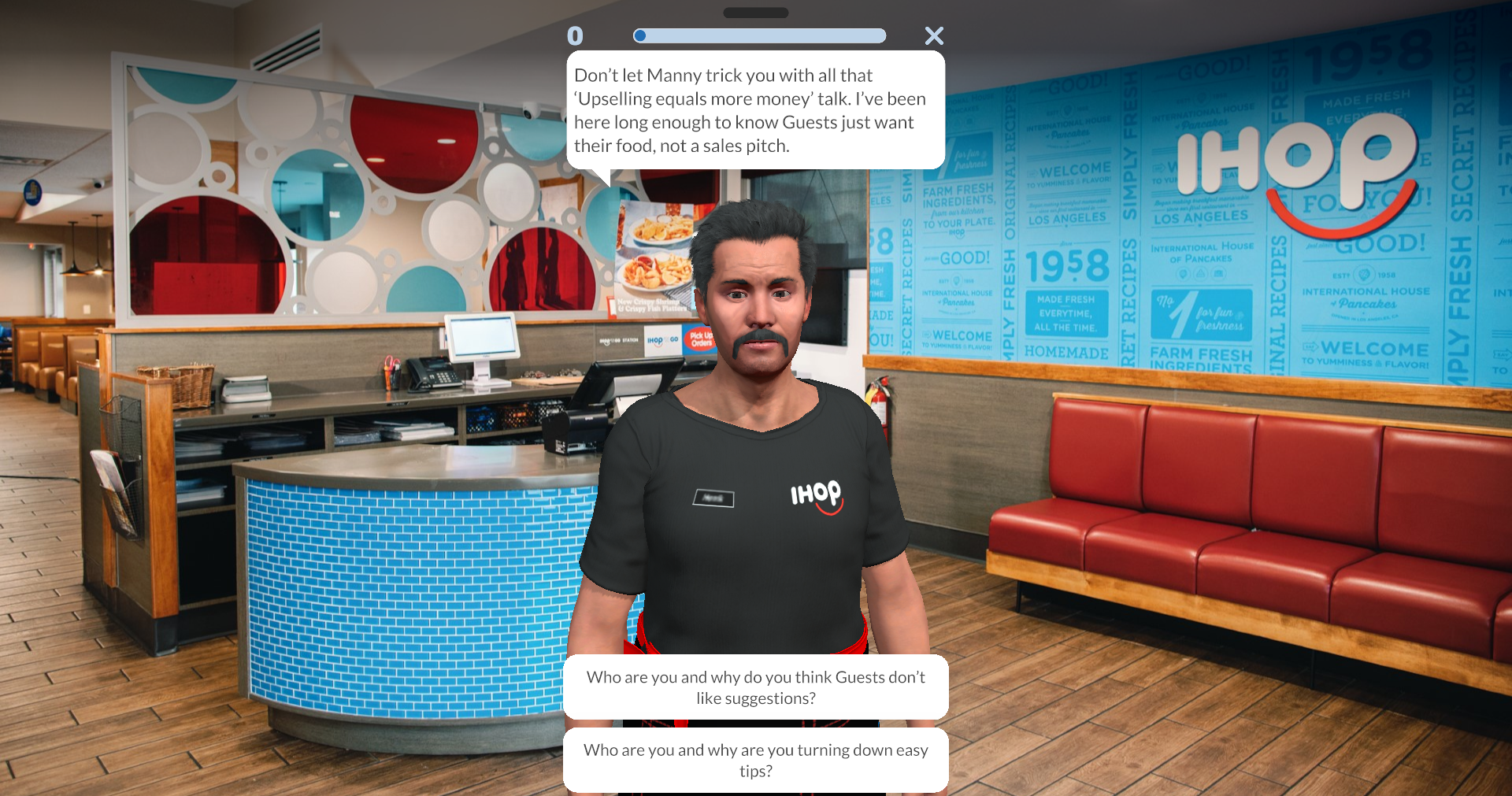
He starts skeptical, doubting the value of upselling and dismissing Manny’s enthusiasm.
He challenges the learner, voicing objections servers often say in real life (“Guests don’t want to be bothered,” “It doesn’t change my tips,” etc.).
He observes the learner’s progress, reacting to their successful or unsuccessful upsells.
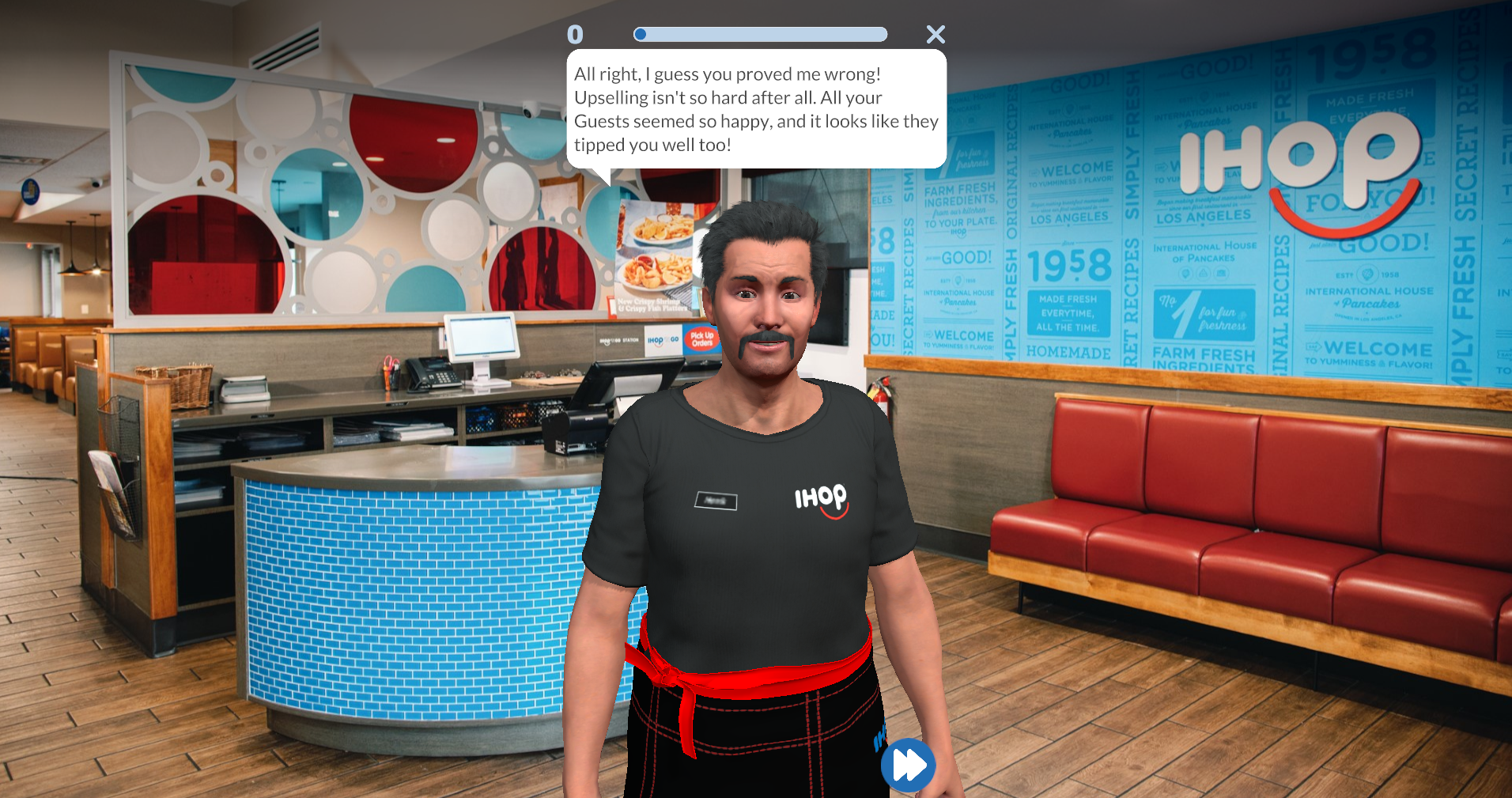
He becomes curious, especially after seeing the learner apply effective strategies confidently.
He begins to shift, acknowledging that upselling might be easier and more natural than he thought.
By the end of the course, Cary’s tone becomes supportive — he admits he’s learned from the learner and may start upselling again himself.
This gradual transformation is emotionally rewarding and reinforces the core learning message:
Upselling is valuable, doable, and worth your time.
It also gives learners a sense of accomplishment by “winning over” someone more experienced — a powerful motivator in behavior-change design.
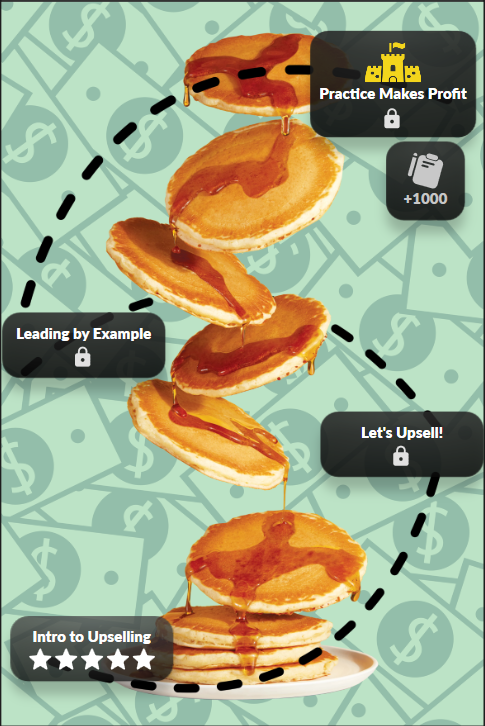
Course Structure (4 Modules):
1. Intro to Upselling
Learners meet Manny and Cary, explore why upselling matters, and see how much money they could earn.
2. Let’s Upsell!
Manny teaches:
Warm greetings
Positive body language
Effective recommendation phrasing
Closing with confidence
3. Leading by Example
Cary attempts a poorly executed upsell.
Learners coach him using IHOP standards — another moment where Cary visibly shifts.
4. Practice Makes Profit
Learners practice with three key IHOP guest types:
Exact Guest
Friendly Guest
Fast Guest
Each path requires varying timing, recommendations, and conversational finesse.
Pilot Results (Q4 2025 – 40 SoCal Restaurants):
+15% Attach Rate
Servers made more consistent recommendations and menu enhancements.
+12% Average Tip Increase
Motivational framing and realistic practice directly influenced earnings.
Managers also reported:
Higher overall server confidence
More natural interactions with guests
Positive buzz around Manny & Cary
“Don’t be a Cary”
Veteran staff re-engaging with upselling